Five Practical Tips for Learning a Language With No Textbook
Learning French or Spanish, you have options everywhere. Apps, textbooks, YouTube channels, conversation exchange partners happy to practice. Learning Nawdm or Kabiyè is a different situation. There is no Duolingo course, no shelf of graded readers at the bookshop, often no structured course at all. What exists is a dictionary, a community of speakers, and your own willingness to keep going. So what actually works? Here are five things that help more than most people expect.
1. Use a dictionary you will actually open, not just own
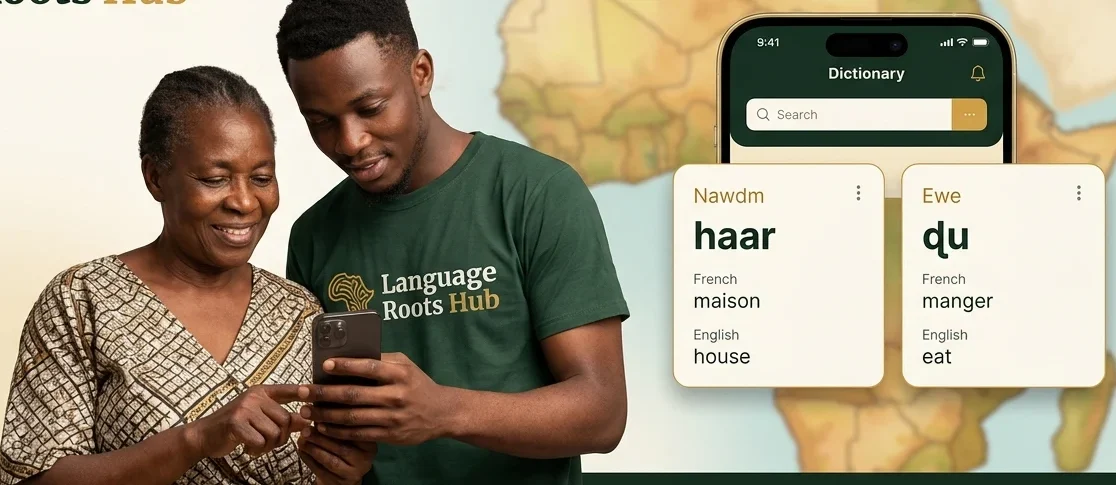
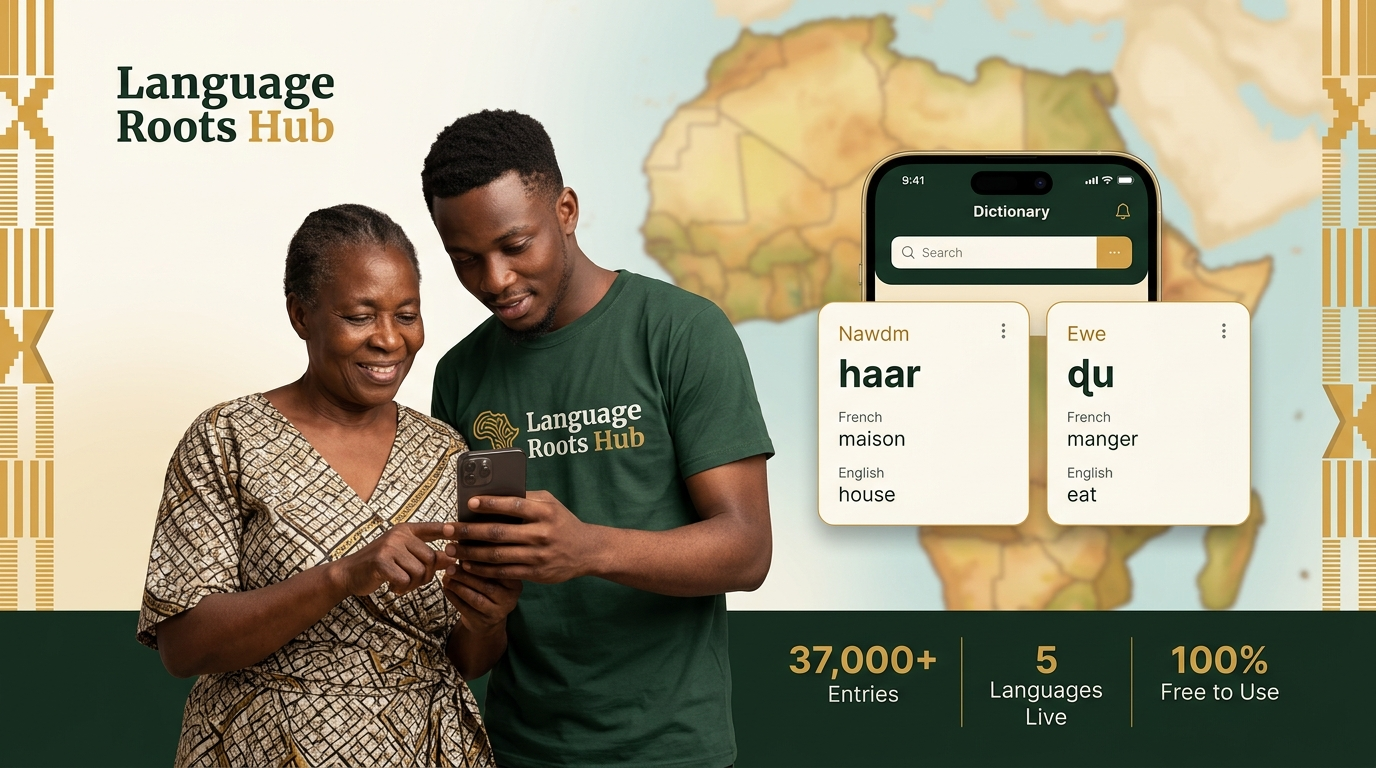
There is a version of language learning where someone buys a thick printed dictionary, puts it on a shelf, and feels like they have made progress. They have not. A dictionary is only useful if you are in it regularly, checking words mid-conversation, looking things up on the bus, finding a phrase right before you need it. A searchable dictionary on your phone does something a printed one cannot: it is with you when the language is actually happening. That changes how often you use it. For languages like Nawdm, Ewe, or Ga, where the dictionary may be your primary learning resource, frequency matters more than depth of occasional study. Open it often. Five minutes a day adds up faster than a two-hour session once a week.
2. Learn words inside phrases, not by themselves
Vocabulary lists are a starting point. The problem is that knowing a word in isolation does not tell you how it behaves in a sentence, what it sounds like next to other words, or when it is actually used versus when a different word would be more natural. Whenever you pick up a new word, try to also memorize one short phrase that uses it. A greeting. A question you might actually ask. A common expression. The phrase gives the word context, and context is what makes things stick. When you are standing in a market or talking to a grandparent, you are not reaching for vocabulary lists. You are reaching for the whole utterance you practiced. Build those from the start.
3. Find native speakers and use them, even in small ways
There is no substitute for this. Without a formal course, native speakers are your course. You do not need structured lessons to benefit from time with people who speak the language. Short, regular exchanges, a few words with someone at church, a question you ask in the language instead of switching to the easier option, stack up over months into something solitary study cannot replicate. It helps to be honest with people about what you are doing. Most speakers of a smaller language are genuinely pleased when someone is making an effort to learn it. They will correct you, which is exactly what you need. Some will slow down. All of them are more useful than any app.
4. Learn by category, not alphabetically
An alphabetical dictionary is organized for looking things up, not for learning. If you open a dictionary at the letter “F” and work your way through, you end up with a random collection of words that share no relationship to each other, with nothing to tell you how to use any of them in context. Learning in clusters works better. Family words together. Food and market vocabulary together. Farming terms, greetings, directions. Words that belong to the same area of life tend to come up together in real conversation, and learning them that way mirrors how the language actually works. It also makes the connections between related words easier to see and remember. Most of the dictionaries on this site include category browsing for exactly this reason.
5. Expect imperfection, and contribute back when you can
A dictionary for a language like Nawdm or Kabiyè is not the product of a large team with years of funding. It is built by a small number of people working carefully with what exists, and it is a work in progress. That means you will occasionally find a word missing, a translation that feels off, or a spelling that does not match what you have heard from speakers. That is not a reason to lose confidence in the resource. It is an invitation. Every dictionary on this site has a built-in way to suggest corrections or missing words, and every suggestion gets reviewed by a real person before anything changes. When you point out a gap, you are not just helping yourself. You are making the dictionary more accurate for everyone who uses it after you. For languages that have always depended on communities to keep them alive, that kind of contribution is not a small thing.
Leave a Reply