Twi is the most widely spoken language in Ghana. Used across the Ashanti Region and much of southern Ghana, and carried by large diaspora communities into Europe, North America, and beyond, it sits at the centre of Akan culture and has long served as a language of trade, music, religion, and everyday life for millions of people. As part of the broader Akan family it exists in several dialects, chiefly Asante Twi and Akuapem Twi, each with its own literary tradition and its own loyal speakers. Despite that reach, a single structured and searchable digital dictionary that genuinely covered the language in full has been harder to come by than you might expect. Here is a look at what went into building one.
Starting with what already existed
Twi has more documentation behind it than many West African languages, thanks to over a century of work by missionaries, linguists, and the Bureau of Ghana Languages. That meant the project had real material to draw from: published wordlists, reference dictionaries, vocabulary compiled by kasahorow, and community-sourced entries covering everything from proverbs and agricultural terms to religious vocabulary and modern technology.
Working across dialects without flattening the language
One of the distinctive challenges with Twi is that the two main dialects, Asante Twi and Akuapem Twi, are closely related but not identical. The same concept often appears in slightly different forms depending on which variety you are working in, and both have enough speakers and enough cultural weight that neither could simply be treated as a footnote to the other. Building the dictionary meant finding a way to represent both fairly, which in practice meant including dialect labels so that a user can see at a glance when a word belongs specifically to one variety rather than being common to both. Flattening all of that into a single undifferentiated list would have been easier to build and less useful to anyone who actually speaks the language.
Turning a collection of entries into something searchable
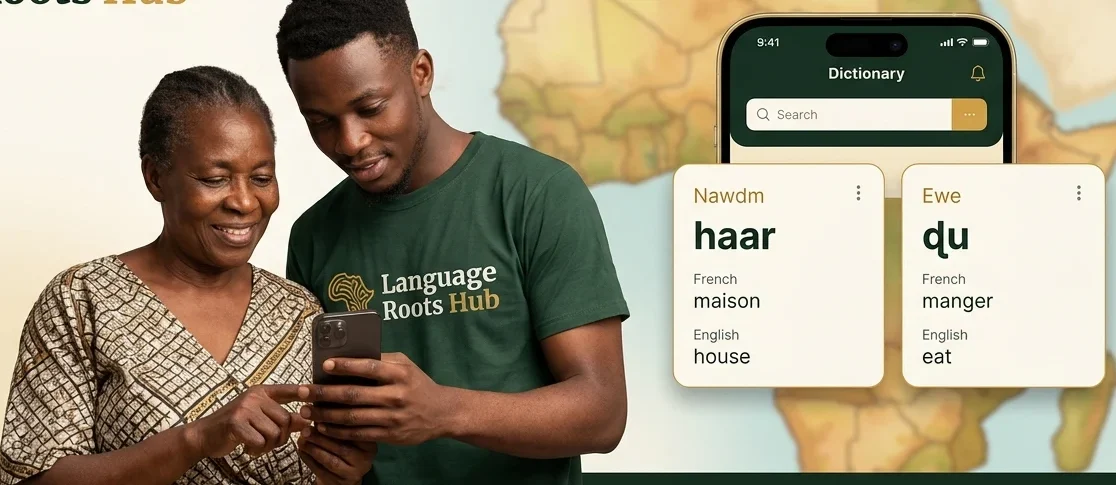
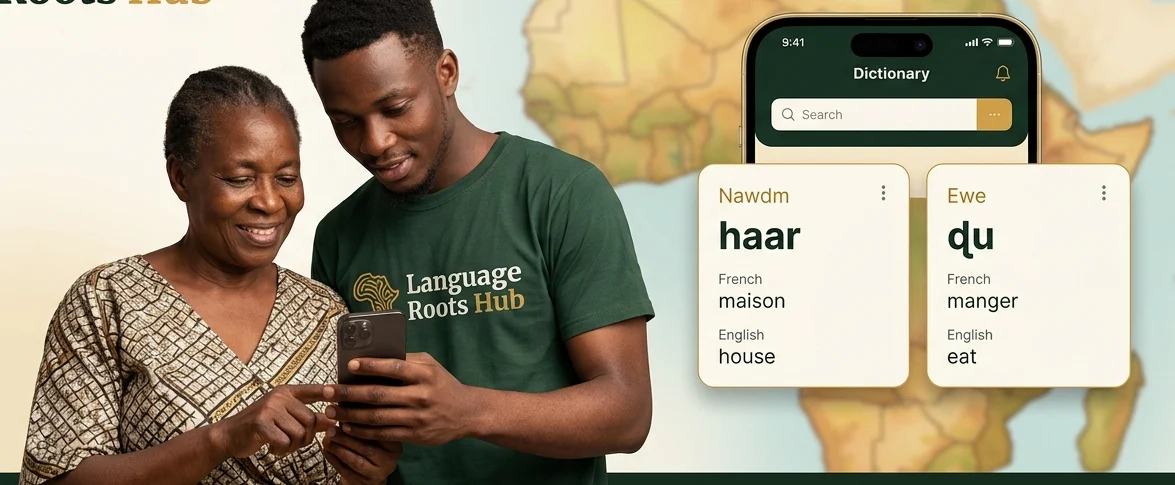
Twi is a tonal language, and accurate spelling includes tonal markers that carry real meaning. The search experience is built to handle those markers properly, so that a user can search in Twi or in English and find what they are looking for, with dialect information included where it matters. Like the other dictionaries in this project, the app works fully offline, because the size of a language’s speaker community has no bearing on whether every individual speaker has consistent access to the internet.
A living project, not a finished one
With a speaker community as large and as geographically spread as Twi’s, the potential for community input is significant. The dictionary accepts suggestions from users, which are reviewed before being added, and that process is what keeps it current. Twi is not a static language. New words enter it, meanings shift, and young speakers in the diaspora are using it in ways that older reference sources never captured. A dictionary that can grow alongside the language is a very different kind of resource from one that was finished years ago and left unchanged.
Leave a Reply