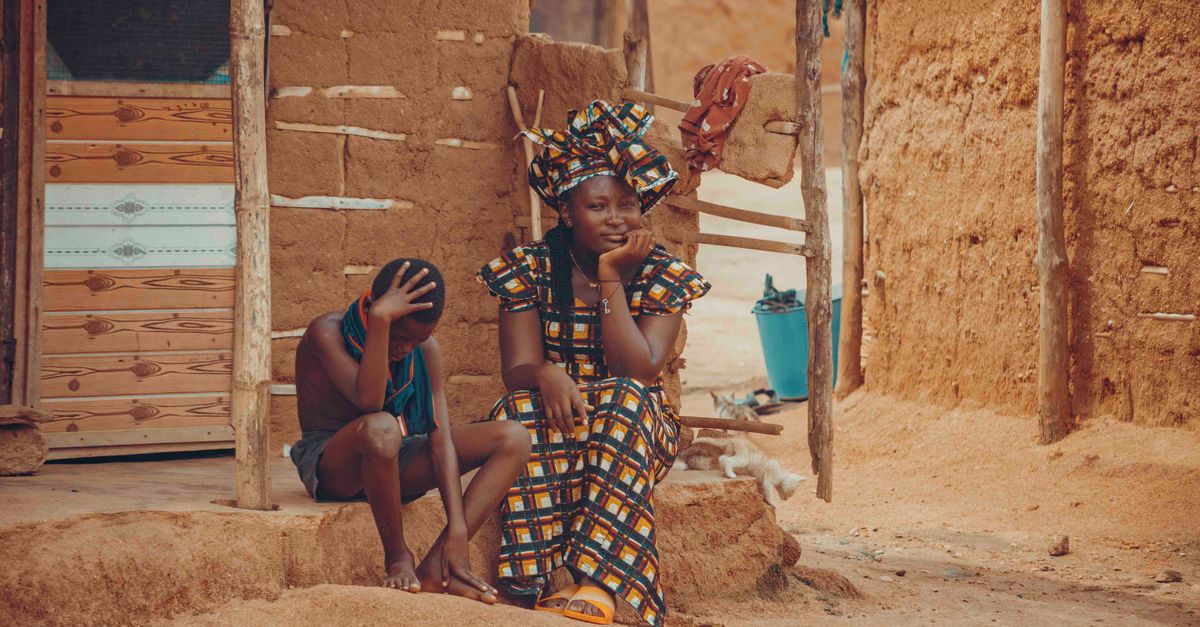
Ewe is spoken across southeastern Ghana, particularly in the Volta Region, and continues into southern Togo and parts of Benin. It is the primary language of the Ewe people and has a literary tradition that goes back to early missionary documentation in the nineteenth century, longer than many languages on the continent. Even with that history behind it, pulling together a comprehensive digital dictionary meant going back to source materials that had never been collected in one place and making them usable in a way they never were before. Here is a look at what that actually involved.
Starting with what already existed
The project drew on nine separate source documents, including published dictionaries, missionary wordlists, community-compiled vocabulary, and academic references built up over more than a century of engagement with the language. Each source had its own approach to spelling Ewe’s distinctive sounds. The nasalized vowels that are central to Ewe pronunciation, written with a tilde as in ẽ, were handled differently across sources, as were several other phonetic features that require characters outside the standard Latin alphabet. Working across nine documents with nine slightly different conventions meant that standardizing the entries, before any other decisions were made, was itself a significant task.
Filling the gaps across borders
Ewe is one of the languages in this project that crosses multiple national borders, meaning its speakers live under three different official languages: English in Ghana, French in Togo and Benin. That reality shaped how the dictionary was built. Rather than producing a resource that served only one of those language contexts, the dictionary covers both English and French alongside Ewe, making it genuinely usable for speakers in Ghana and Togo alike. That meant not just translating in one direction but building entries that hold up in both language environments, which is a different kind of work from a straightforward bilingual project.
Turning a collection of entries into something searchable
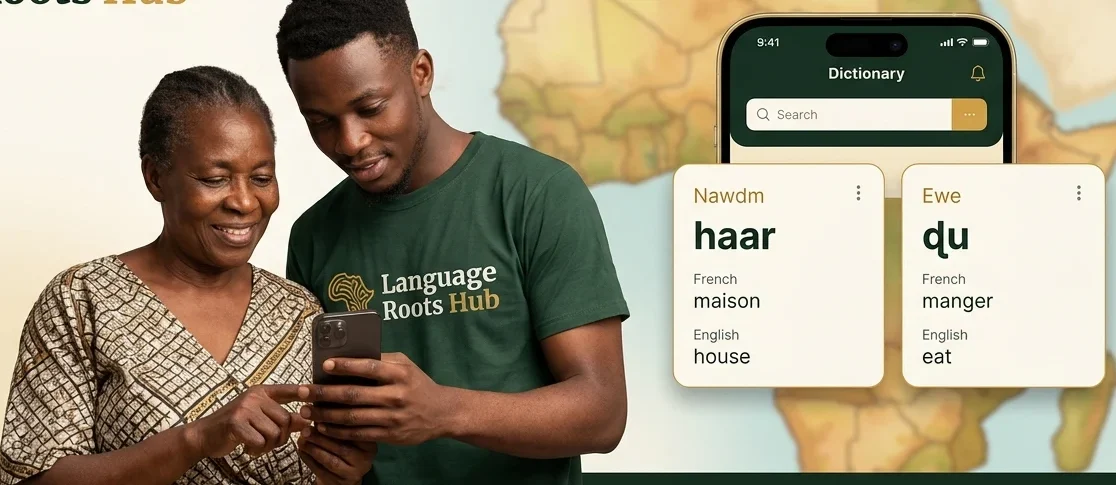
The result is a searchable app with over four thousand entries, full offline capability, and proper support for Ewe’s tonal markers and special characters. The name of the app, Nyagbalẽ, comes from the Ewe language itself. That was a deliberate choice, a way of making clear from the start that the tool belongs to the community it serves rather than being something built for it from the outside. The search experience is built to handle Ewe’s phonetic complexity, so that users can find what they are looking for whether they type in Ewe, English, or French, without needing to know which source document originally contained the entry or how that source happened to spell it.
A living project, not a finished one
The dictionary is designed to keep growing. Ewe speakers can suggest words that are missing and flag entries that need correction, and every suggestion goes through a review process before it is added. For a language spoken across three countries and in diaspora communities around the world, that kind of ongoing input is what keeps the resource honest. The version that existed on the first day the app launched was a starting point, not a conclusion, and the dictionary that exists now is already better because of the people who have been using it and contributing to it since.
Leave a Reply