Why So Many African Languages Are Missing From the Internet
Open a browser and search for a French-English dictionary. You will find dozens of results within seconds, built by universities, hobbyists, and billion-dollar tech companies alike. Now search for a dictionary in Nawdm, Kabiyè, or any of the hundreds of other languages spoken across West Africa. The results thin out fast. Often there is nothing at all. That gap is not accidental, and it is not because these languages are somehow less structured or less developed than the ones that are well-represented online. The vocabulary is there. The grammar is there. The history is there. What is missing is the digital infrastructure, and understanding why it is missing is the first step toward doing something about it.
Building a real dictionary takes sustained effort. That effort has always gone toward languages with the largest existing markets, the ones that make commercial sense to a company deciding where to invest. Nawdm has around 100,000 speakers. Kabiyè has over a million. Neither number is small, but neither number makes it profitable for a tech company to build a searchable database, hire native-speaking editors, and maintain it over years. So they do not. And the language is left out of the digital world by default, not by any decision anyone explicitly made.
What gets lost when a language has no digital presence
When a language exists only in speech and in the memory of its speakers, it becomes vulnerable in a specific way. Younger generations growing up with phones and social media in French or English absorb a message that nobody necessarily means to send: that their mother tongue is less useful, less modern, less worth investing time in. That message is not spoken out loud. It does not have to be. It is communicated by what is present and what is absent. If your language is everywhere on your phone, it feels alive. If it is nowhere, something quieter happens. Over a generation or two, that pressure can do real damage to a language’s survival, regardless of how many people currently speak it. Languages do not usually disappear overnight. They erode gradually as speakers shift to whichever language has more economic and digital presence. The shift is almost never deliberate. It is just the path of least resistance.
A searchable dictionary will not reverse that pressure on its own. But it does something concrete: it puts the language in the same digital spaces where its speakers already live, on their phones, in their searches, alongside the languages they are told matter. It is a small act. It is also a real one.
What it actually takes to build one
The honest answer is patience and a willingness to do unglamorous work. Real dictionaries start with real vocabulary, gathered from published references, community word lists, and the input of people who actually speak the language. Not machine-translated in bulk from a bigger language nearby. Not scraped from whatever happens to be online. Each entry needs checking, cross-referencing, and organizing before it is genuinely useful to anyone. For some languages, very little existing material is available. For others, there are academic references that were never digitized, or scanned documents that require painstaking extraction before the content can be used in any modern format. The technical work and the linguistic work happen at the same time, and neither one is fast.
That’s the approach behind every dictionary listed on this site, starting with Nawdm, a language spoken in the Kara region of northern Togo, and Kabiyè from the same region. Neither happened overnight, and neither is finished, since a living language keeps adding words the same way it always has.
A gap that’s closing, one language at a time
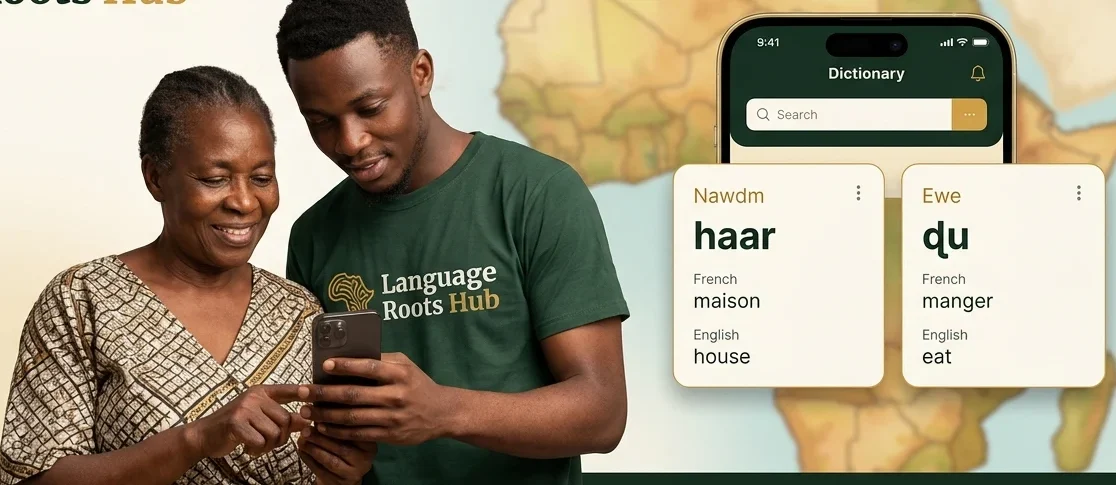
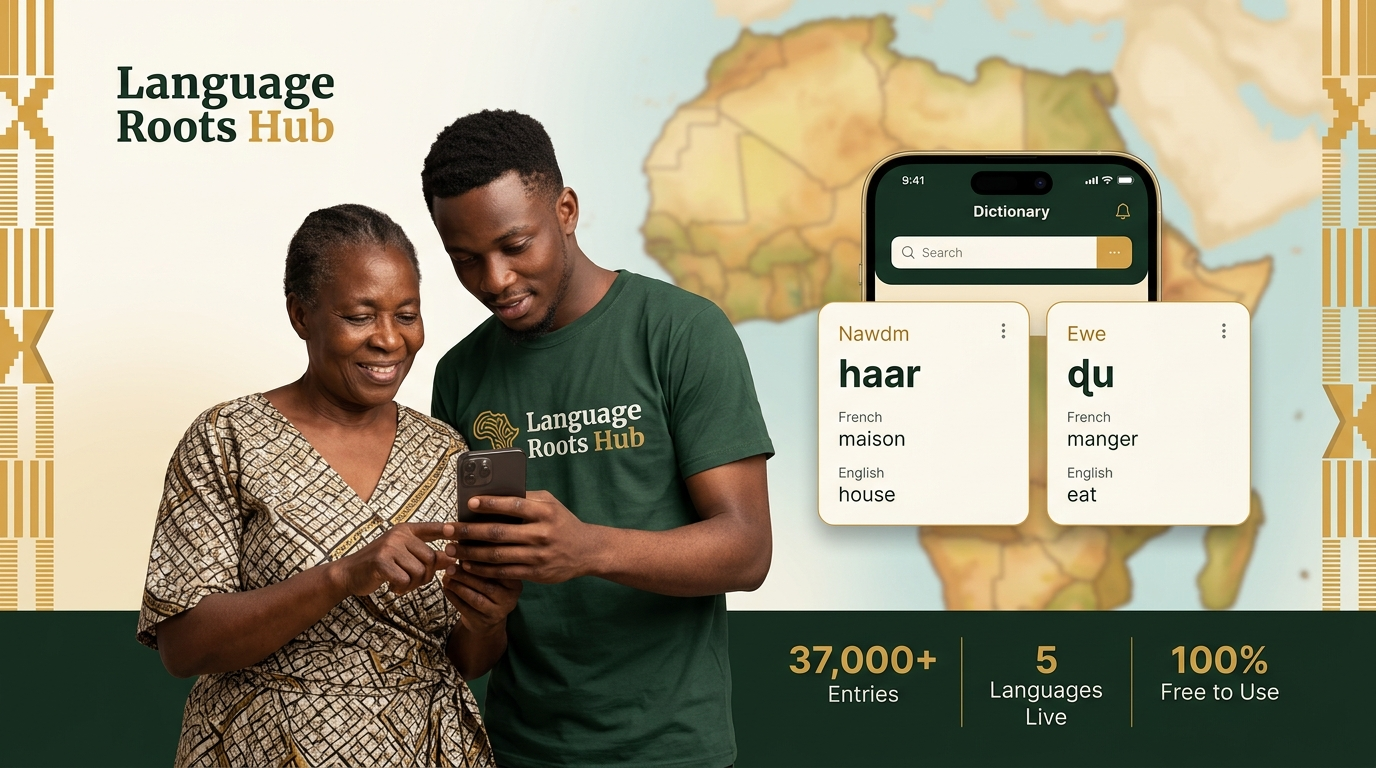
The good news is that the barrier to building these tools has genuinely dropped. What once required a publishing house or a university grant can now be done by a small, motivated team with the right approach and enough patience. That is exactly what is happening here and across other independent language documentation projects in Africa and beyond. Language Roots Hub exists for that reason. Not to replace the work of linguists, community organizations, or government language bodies, but to make the results of that work findable, searchable, and free. The dictionaries on this site started with existing scholarship and extended it into a digital format that anyone with a phone can access. That is not the whole solution to the problem of African language visibility online. But it is a real part of one.
Leave a Reply