Twi is an Akan language spoken by millions of people across Ghana, primarily among the Ashanti and Akuapem communities. It is one of the most widely spoken languages in the country and serves as a lingua franca across many parts of southern Ghana. For anyone visiting Ghana, studying Ghanaian culture, or reconnecting with Akan heritage, learning how to greet properly in Twi is one of the most important first steps.
In Akan culture, greetings are not simply polite formalities. They signal respect, warmth, and social awareness. Greeting someone properly, especially an elder, shows that you were raised well. Failing to greet is considered rude and can create an immediate bad impression. This guide covers 20 essential Twi greetings you can start using right away.
Time-Based Greetings in Twi
The Akan people have specific greetings for the morning, afternoon, and evening. These are the first phrases any learner should master. When someone greets you with one of these, the proper response follows the pattern of saying Yaa before repeating the greeting. The word Yaa is a respectful acknowledgment that mirrors the greeting back to the speaker.
| Twi Phrase | English Meaning | Proper Response |
|---|---|---|
| Maakye | Good morning | Yaa maakye |
| Maaha | Good afternoon | Yaa maaha |
| Maadwo | Good evening | Yaa maadwo |
Asking About Health and Wellbeing
After the time-based greeting, Akan speakers typically ask about each other’s health. This is a natural and expected extension of any proper greeting. The question Ete sɛn? literally asks about your condition, while Wo ho te sɛn? specifically asks about your body and health.
| Twi Phrase | English Meaning | How to Respond |
|---|---|---|
| Ete sɛn? | How are you? | Me ho yɛ (I am fine) |
| Wo ho te sɛn? | How is your health? / How is your body? | Me ho yɛ, meda wo ase (I am fine, thank you) |
| Me ho yɛ | I am fine / I am well | Used as a response, not a question |
| Me ho yɛ, meda wo ase | I am fine, thank you | A complete and polite response |
| Wonyanee/wasɔreeɛ? | Are you awake? | Used as a morning check-in when visiting or calling on someone early in the day |
Everyday Expressions Every Learner Needs
These are phrases you will use in almost every interaction with an Akan speaker. Some of them, like Akwaaba and Medaase, have become well known even outside Ghana.
| Twi Phrase | English Meaning | Notes |
|---|---|---|
| Akwaaba | Welcome | One of the most famous Akan words, used to welcome someone to a home, gathering, or country. Ghana itself is known for this spirit of welcome. |
| Meda wo ase | Thank you | Literally means “I lie at your feet,” expressing deep gratitude and humility toward the one being thanked. |
| Medaase | Thank you | A shortened and very commonly used form of meda wo ase. Both are acceptable in everyday speech. |
| Yoo | Okay / Alright / It is well | A versatile expression of acknowledgment and agreement. You will hear this constantly in Twi conversation. |
| Da yie | Goodnight / Sleep well | Said when parting in the evening or before someone goes to sleep. Literally means “sleep well.” |
| Nante yie | Go well / Safe travels | Literally means “walk well.” Said when someone is leaving, as a warm farewell and blessing for their journey. |
| Yɛbɛhyia bio | We will meet again | A warm farewell that expresses hope for a future meeting. Often said alongside Nante yie. |
Respectful Expressions for Cultural Situations
Akan culture places great importance on respect, permission, and acknowledgment. These phrases are especially important in formal, communal, or elder-present settings.
| Twi Phrase | English Meaning | When to Use It |
|---|---|---|
| Agoo | Excuse me / May I have your attention / Permission to enter | Said before entering a room, speaking to a group, or interrupting someone who is busy. It is both a knock and a request for acknowledgment. |
| Amee | You may proceed / Permission granted | The proper and expected response when someone says Agoo to you. Without this response, the person should not proceed. |
Introducing Yourself in Twi
Once greetings are exchanged, a typical conversation often moves into self-introduction. These phrases will help you introduce yourself and ask about the other person.
| Twi Phrase | English Meaning |
|---|---|
| Me din de… | My name is… (complete with your name) |
| Wo din de sɛn? | What is your name? |
| Me firi… | I am from… (complete with your place of origin) |
| Wo firi he? | Where are you from? |
Cultural Tips for Greeting in Twi
Knowing the words is only part of what makes a good greeting. How and when you use them matters just as much. Here are some cultural guidelines to help you greet Akan speakers with confidence and respect.
- Always greet elders first. When an elder enters the room or walks past, younger people are expected to greet them first without waiting to be spoken to.
- Do not rush the greeting. Greetings in Akan culture are not hurried. It is entirely normal and expected to spend several minutes exchanging pleasantries before moving to the business of a visit or conversation.
- Use your right hand. When shaking hands, passing something, or pointing, use your right hand or both hands together. Using only the left hand is considered disrespectful across many Ghanaian cultures.
- Always respond. Silence in response to a greeting is considered rude. Even a nod and a quiet Yoo is better than no response at all.
- Say Agoo before entering. Even if a door is open, it is respectful to say Agoo before entering someone’s home or workplace. Wait for Amee before proceeding inside.
- Greet everyone in the room. When you enter a gathering or a home, make an effort to greet each person individually, especially elders, rather than making one general announcement.
Keep Learning Twi
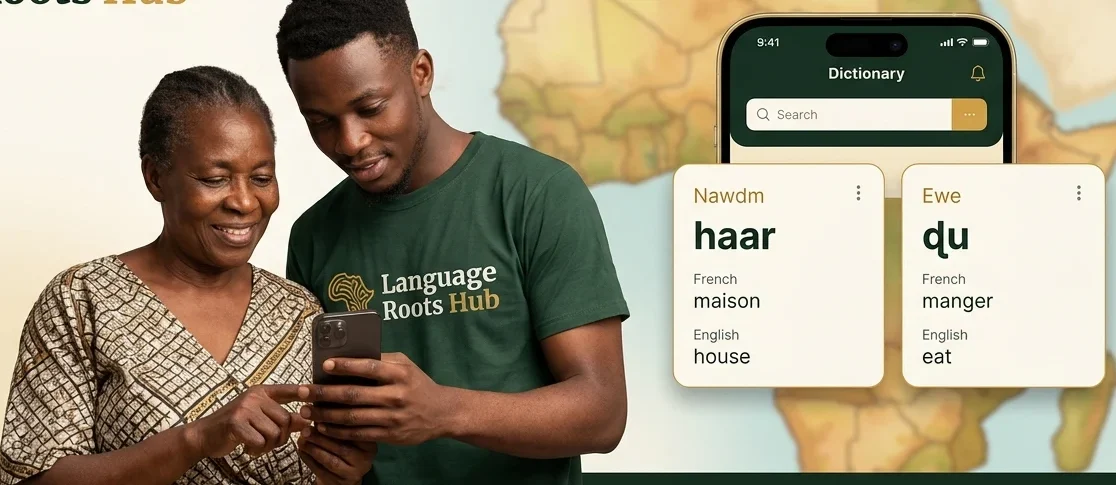
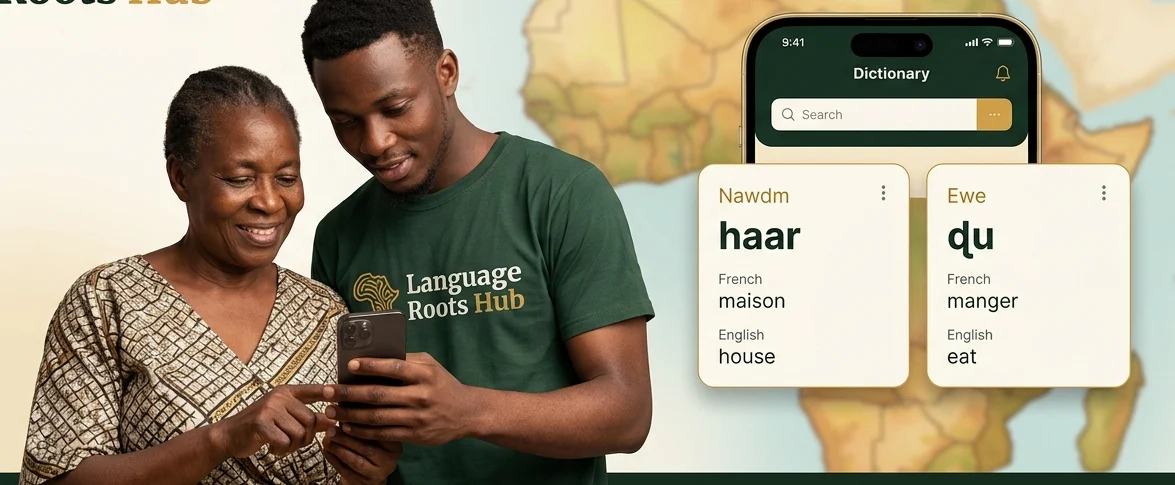
These phrases are a strong foundation, but Twi has much more to explore. The language has a rich vocabulary, a deeply developed proverb tradition, and tonal patterns that give it a musical quality. If you want to continue learning, our Language Roots Hub Twi Dictionary is a free, searchable resource you can use online or install directly on your phone to use even without an internet connection.
Learning even a handful of greetings in Twi opens conversations that would not have happened otherwise. People notice, and they appreciate it. That is a good reason to start.
Leave a Reply