Twi is the most widely spoken Ghanaian language and one of the most accessible African languages to start learning. It is tonal, which means pitch matters in pronunciation, but its vocabulary is rich, musical, and deeply tied to one of West Africa’s most celebrated cultures. Whether you are visiting Ghana, have Ghanaian family or friends, or simply want to explore a new language, this guide gives you a practical starting point across the most important everyday word categories.
Numbers in Twi
Learning to count in any language opens a door quickly. In Twi, the numbers from one to ten are:
1 — baako
2 — mmienu
3 — mmiensa
4 — anan
5 — enum
6 — nsia
7 — nson
8 — nwotwe
9 — nkron
10 — du
From ten onwards, Twi builds numbers by combining. Eleven is “du baako” (ten and one), twelve is “du mmienu,” and so on. Twenty is “aduonu,” thirty is “aduasa,” and one hundred is “ɔha.”
Greetings and Basic Expressions
Greetings in Twi reflect the time of day and carry a warmth that is central to Ghanaian social culture. Here are some of the most commonly used:
Good morning: Maakye
Good afternoon: Maaha
Good evening: Maadwo
How are you? (to one person): Wo ho te sɛn?
I am fine: Me ho yɛ
Thank you: Meda wo ase
Please: Mesrɛ wo
Yes: Aane
No: Daabi
Welcome: Akwaaba
Goodbye: Nante yie (travel well)
Akwaaba in particular is widely known in Ghana and used to welcome visitors. You will see it on signs and hear it at airports, markets, and homes across the country.
Common Colours in Twi
White: fitaa
Black: tuntum
Red: kɔkɔɔ
Yellow: akokɔ sradeɛ (literally meaning chicken fat, which is yellow)
Green: ahabammono (literally meaning green leaf)
Blue: bluu (a borrowing from English, widely used in modern Twi)
Days of the Week
Monday: Dwoada
Tuesday: Benada
Wednesday: Wukuada
Thursday: Yawoada
Friday: Fida
Saturday: Memeneda
Sunday: Kwesida
Note that these day names are different from the personal Kra names given to children born on each day. Those names, such as Kofi for a boy born on Friday or Ama for a girl born on Saturday, are part of the Akan day name tradition covered in a separate article on this site.
Family Words in Twi
Mother: maame
Father: agya
Child: ɔba
Son: ɔbabarima
Daughter: ɔbabaa
Brother: nua barima
Sister: nua baa
Grandmother or Grandfather: nana
Family or clan: abusua
The word abusua in Akan refers not just to the immediate family but to the extended matrilineal clan, which is the basic social unit of Akan society. Knowing this word opens up a much wider understanding of how Akan families are structured.
Common Food and Market Words
Water: nsuo
Food: aduane
Rice: ɛmo
Meat: ɛnam
Fish: nsuomnam
Market: dwam
How much?: Sɛn?
It is expensive: Ɛdɔɔso
It is cheap: Ɛyɛ kakra
Note that meat (ɛnam) and fish (nsuomnam) are two separate words in Twi. Nsuomnam literally means “water animal,” which is a helpful way to remember it.
Why Twi Is Worth Learning
Twi is not just a language for speaking to other Ghanaians. It is a gateway into one of Africa’s richest oral literary traditions, including proverbs, stories, songs, and ceremonies of the Akan people. It is also one of the most practical languages in West Africa for travel: Twi speakers can be found throughout Ghana, and the language is understood from the coast all the way to the interior regions.
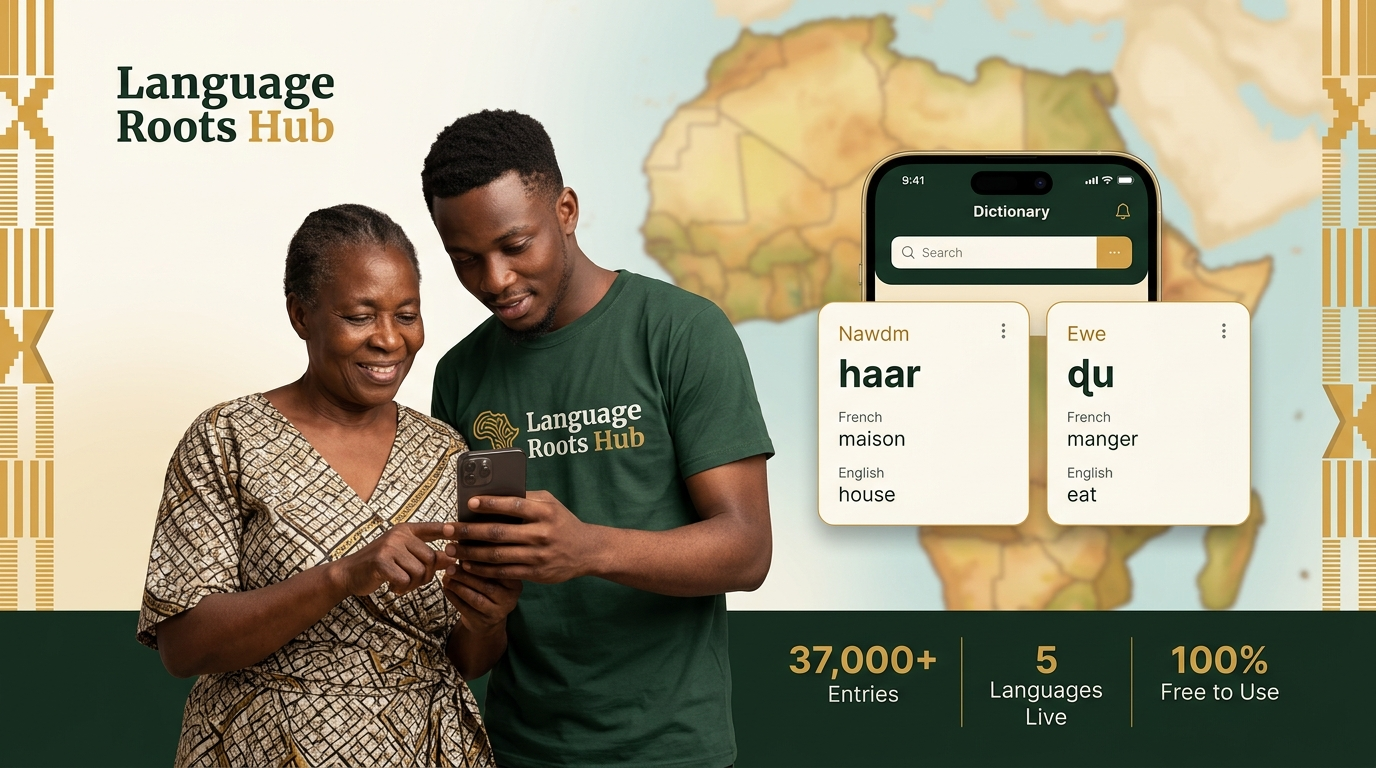
Twi is also growing in the diaspora. In the United Kingdom, the United States, Canada, and Germany, Ghanaian communities maintain Twi as a home language, and a growing number of younger diaspora members are actively learning it. Digital tools and resources like the Twi dictionary on Language Roots Hub are making that process more accessible than it has ever been before.
Go Further With the Twi Dictionary
This guide covers only a fraction of what Twi has to offer. For a much wider vocabulary, the Twi dictionary on Language Roots Hub gives you free, searchable access to thousands of entries in Twi and English. No account is needed. Visit the Twi dictionary page to get started.
Leave a Reply