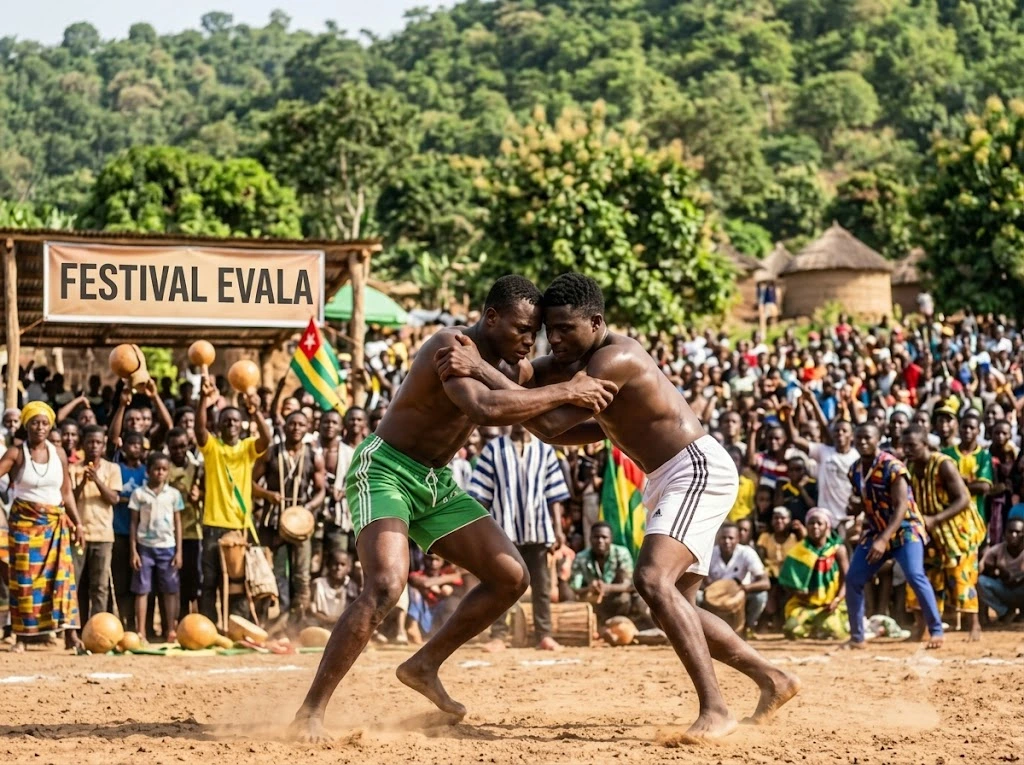
Every July, in the Kara Region of northern Togo, something remarkable happens. Hundreds of young Kabiyè men who have reached the age of initiation gather not in a hall or a classroom but in open ground, in mountain clearings, and on hillsides worn smooth by generations of the same ritual. They wrestle. But this is not sport in any simple sense of the word. It is Evala, the Kabiyè initiation festival, and it is one of the most significant living cultural traditions in West Africa.
What Evala Is
 Evala marks the passage from youth into adulthood for Kabiyè men. It is not a single event but a week-long process involving fasting, spiritual preparation, the climbing of specific mountain peaks in the Kara hills, and ultimately the wrestling matches themselves. Young men who have come of age, typically between eighteen and their mid-twenties, participate under the guidance of elders who have themselves passed through the same rite.
The wrestling matches are public and community-wide. Spectators come from across the Kara Region and beyond. A young man who performs well in Evala wrestling earns not just applause but real social standing. He is recognised as having demonstrated the character and strength that Kabiyè society associates with mature manhood.
The Spiritual Dimension
Evala is not only physical. Before the wrestling begins, participants undergo a period of separation from their everyday lives. They fast, maintain specific disciplines, and are guided through rituals by elders who carry the knowledge of what the initiation means. The mountains of the Kara Region are not just a backdrop. They are part of the ceremony itself. Climbing those peaks is a symbolic act: the young man is moving upward, out of one stage of life and into another.
Prayers and libations are part of the Evala period. The Kabiyè language carries all of this. Songs sung during the festival, instructions given by elders, and the words spoken in ritual contexts are in Kabiyè, not in French, which is Togo’s official language. This makes Evala not just a cultural event but a linguistic one. It is a week when the Kabiyè language is at the very centre of community life.
Evala and Kabiyè Identity
Kabiyè is one of Togo’s national languages, used in schools and on national radio alongside French. But the language carries a depth that formal education only partly reaches. Evala is one of the places where that depth lives. The vocabulary of initiation, the songs of the mountains, the expressions of elder counsel during the festival: all of these form a layer of Kabiyè that a dictionary alone cannot fully capture, but which the dictionary can open a door to.
For anyone interested in Kabiyè culture, Evala is the most vivid possible introduction. It shows a language community at full expression: spiritual, physical, intergenerational, and confident in its own identity. It is a reminder that a language is not simply a communication tool. It is a living structure that holds a community’s deepest values and beliefs.
Kabiyè Beyond the Festival
With over a million speakers across Togo and with communities in Ghana and other neighbouring countries, Kabiyè is a language with significant reach. It is taught in some Togolese schools and broadcast on national radio, which gives it a stronger institutional footing than many African languages of comparable size. Evala is one reason for that strength: when a language is the vehicle for a community’s most sacred rituals, it is given a kind of cultural protection that policy alone cannot provide.
Explore Kabiyè
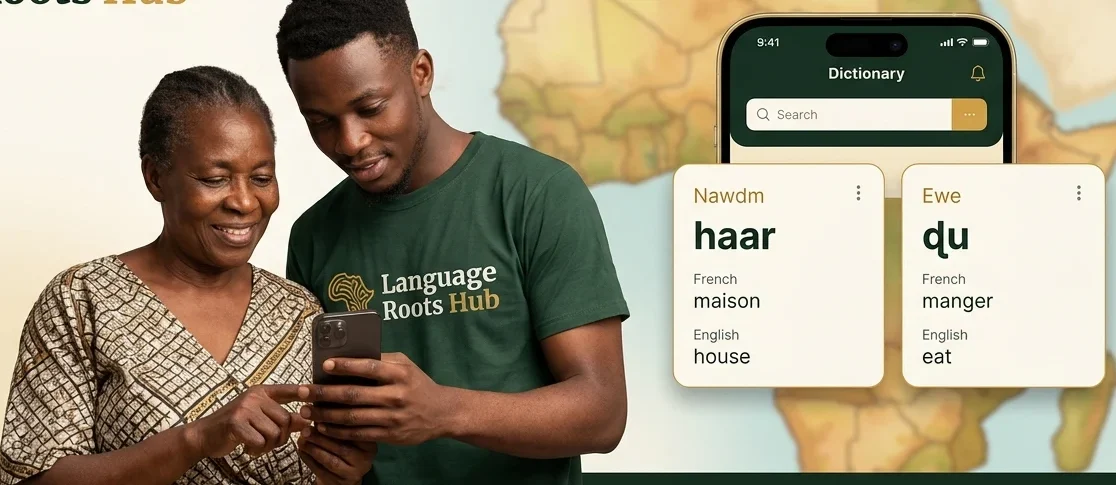
The Kabiyè dictionary on Language Roots Hub gives you free access to searchable Kabiyè vocabulary across English and French. If Evala has drawn your curiosity toward the language, the dictionary is a natural next step. Visit the Kabiyè dictionary page to get started.
Leave a Reply