Author: GastonJ
-
Ewe Names and Their Meanings: A Complete A to Z Reference
Among the Ewe-speaking peoples of Ghana, Togo, and Benin, a personal name is rarely just a label. It is a declaration, a prayer, a memory, or a message that travels with a person through their entire life. The Ewe language, one of the major languages of the West African coast, has one of the richest…
-
When a Nawdm Name Tells a Story: The Cultural and Spiritual Significance of Nawdm Personal Names
Imagine meeting someone whose name, when translated, means “God alone knows”. Or someone whose name says “death is counting its days.” Or another whose name quietly declares, “I am the one who disturbs them.” Among the Nawdba people of northern Togo and Ghana, this is not unusual. A personal name in the Nawdm language is…
-
Nawdm Names and Their Meanings: A Living Community Reference
Among the Nawdba people of northern Togo and Ghana, a personal name is far more than an identifier. It can carry a prayer, a family memory, a message from parents to a child, or a reflection on the difficult and joyful moments of life. The Nawdm language has a rich tradition of deeply meaningful personal…
-
What Are the Kwa Languages of West Africa? A Complete Guide
Kwa is one of the major branches of the Niger-Congo language family, running along the coastal and forest belt of West Africa from Côte d’Ivoire through Ghana and Togo to Benin. Three of the languages covered on this site, Twi, Ewe, and Ga, all belong to this branch, which makes Kwa the most represented family…
-
The Ewe People: Origins, Migration, and Culture
The Ewe are one of the major peoples of the West African coast, with communities spread across the Volta Region of Ghana, southern Togo, and parts of Benin. Their language, also called Ewe, belongs to the Gbe cluster within the Kwa branch of Niger-Congo, the same branch covered in our Gur and Kwa languages piece.…
-
The Kabiyè Language: Origins, Speakers, and Linguistic Features
Kabiyè is the language of the Kabiyè people, rooted in the mountainous Kara Region of northern Togo. It is one of only two languages, alongside Ewe, officially recognized as a national language of Togo, even though French remains the language of government and formal education. For a country with dozens of local languages, that recognition…
-

Sintu-Janjaagu: The Harvest Festival That Unites Niamtougou
Every year, as the first Saturday of April comes around, the market town of Niamtougou in northern Togo fills with drumming, dancing and the smell of bean fritters and freshly brewed millet beer. This is Sintu-Janjaagu, the great harvest festival of the Nawdba (also written Nawdéba) and their neighbors the Lamba, two peoples who share…
-
The Twi Months of the Year: Traditional Names, Meanings and the Akan Seasonal Calendar
A calendar does more than tell us when a new month begins. It can also preserve a people’s observations of nature, agriculture, weather and community life. Among Akan-speaking communities of Ghana, the traditional names of the twelve months show exactly how this works. Names such as Ɔpɛpɔn, Ɔgyefoɔ, Ɔbɛnem, Oforisuo and Ayɛwohomumɔ are not simply…
-
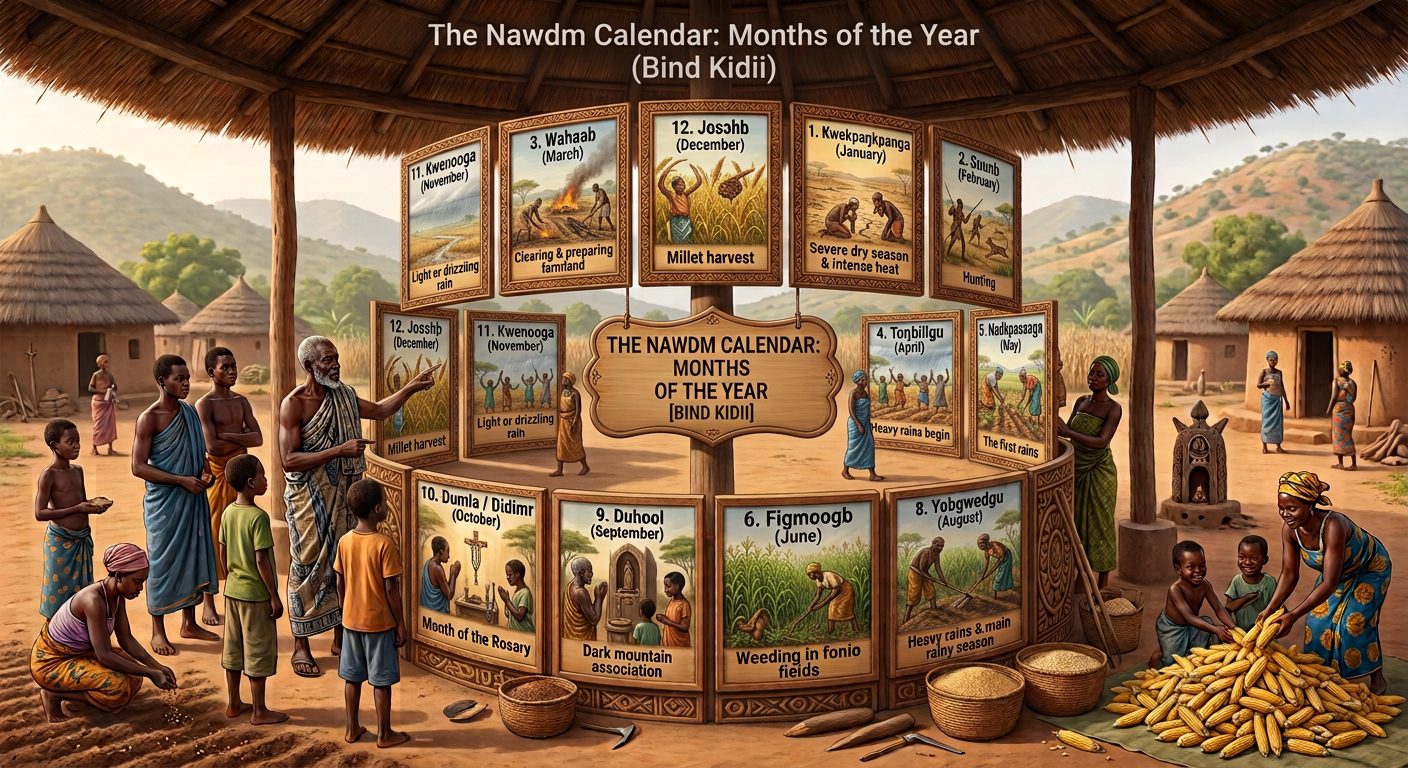
The Months of the Year in Nawdm: A Calendar Rooted in Nature and Farming
The names of the months in the Nawdm language tell a story about the relationship between the Nawdba people, their environment and their traditional way of life. Rather than being labels attached to January through December, the traditional Nawdm month names are connected to the changing conditions of the year: dryness and heat, hunting, preparation…
-
The 12 Kabiye Months: Agriculture, Seasons and Tradition in Northern Togo
The traditional calendar of the Kabiye people of northern Togo is more than a system for measuring the passage of time. Its twelve month names preserve a direct connection between language, agriculture, climate, food production and cultural traditions. Known in Kabiye through names followed by fenaɣ, meaning “month” or referring to the moon, the traditional…